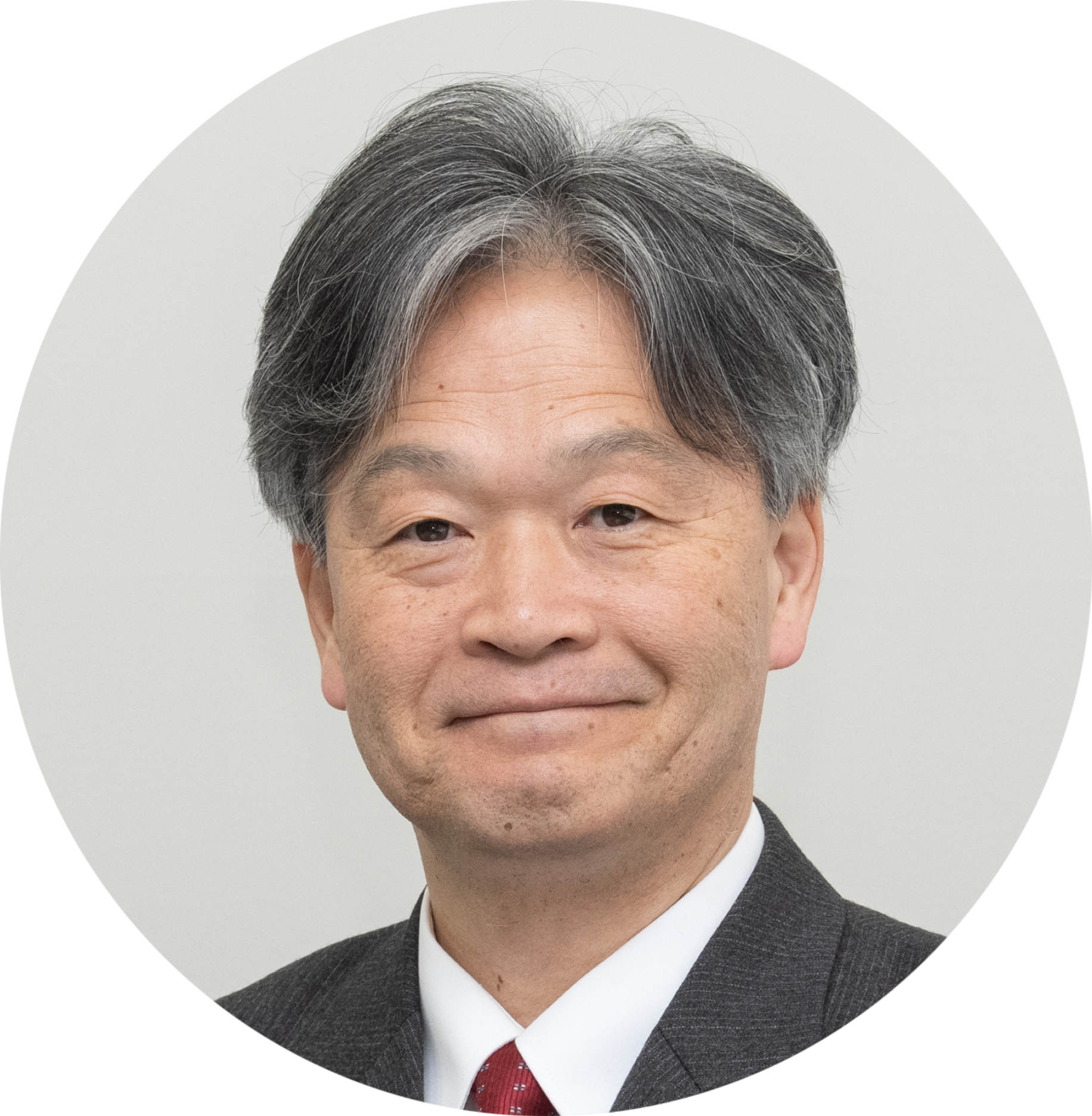
Hitoshi
Miyamoto
Shibaura Institute of Technology, Tokyo, Japan
Hitoshi Miyamoto is Professor of Civil Engineering at Shibaura Institute of Technology, Tokyo, Japan. He received his Ph.D. in Engineering from Kobe University in 2002. His research interests span environmental hydraulics, river engineering, and integrated river basin management. His research has evolved from fundamental studies of open-channel hydraulics and flow visualization to broader investigations of river and watershed environmental processes. A major focus of his work is the dynamics of riparian vegetation and its interactions with flood flows and fluvial ecosystems, with particular emphasis on balancing flood-risk reduction and ecological conservation in sustainable river management. His research combines field observations, hydraulic modeling, and vegetation dynamics modeling. In recent years, he has further expanded these approaches by integrating remote sensing, UAV and satellite imagery, and machine learning into river monitoring and management. His research also addresses river temperature, urban flooding, and image-based environmental monitoring. He is actively engaged in international collaborative research, particularly in Asia, as well as collaborative research and technology development with industry and public-sector organizations. Through these interdisciplinary and collaborative approaches, he seeks to develop practical, scientifically grounded solutions for sustainable river management, flood-risk reduction, and the conservation of riverine ecosystems.
Speech title "Managing Changing Rivers: Long-Term Perspectives on Riparian Vegetation, Flood Risk, and Ecosystem Conservation"
Abstract-Rivers worldwide are increasingly affected by climate change and
human activities. At the same time, river systems change gradually over
decadal time scales, often in ways that are difficult to detect from
short-term observations. Recognizing these long-term changes is therefore
important for sustainable river management.
One prominent example is the expansion of riparian vegetation and subsequent
riverine forestation. Riparian vegetation is a fundamental component of
river ecosystems, whereas excessive growth can reduce flood conveyance
during large floods. Over longer periods, such expansion may also alter
habitat conditions and reshape the ecological character of river corridors.
Riverine forestation should therefore be addressed from both flood-risk and
ecosystem-conservation perspectives.
This keynote examines how long-term vegetation dynamics can be better
understood and incorporated into river management, based on studies in
Japanese rivers. Particular emphasis is placed on the early stage of
secondary succession, when vegetation recruitment may provide a useful
indicator of future forestation and an opportunity for earlier management
intervention. Long-term monitoring is also important for detecting gradual
change across broad spatial scales. Advances in remote sensing and UAV
imagery, coupled with machine learning, now provide improved capability to
track vegetation dynamics over time and support more timely management
decisions.
Sustainable river management requires early recognition of gradual
environmental change and a timely response before its effects become
difficult to manage. A long-term and adaptive perspective could help us
manage changing rivers while reducing flood risk and conserving riverine
ecosystems.

Chia-Ming Chang
National Taiwan University, Taiwan
Chia-Ming Chang holds a B.S. and M.S. in civil engineering (National Taiwan University, 2002, 2004) and a Ph.D. in civil and environmental engineering (University of Illinois, 2011). He is currently a Professor and Deputy Director of AI Center in the Department of Civil Engineering at National Taiwan University and an Adjunct Research Fellow at the National Center for Research on Earthquake Engineering. His research interests include structural control, health monitoring, and smart structures.
Speech title "Synergizing Computer Vision and Machine Learning for Infrastructure Inspection: Applications Across Buildings, Bridges, and Tunnels"
Abstract-Maintaining the integrity of critical infrastructure depends heavily on regular condition assessments. However, traditional operation and maintenance routines rely primarily on manual visual inspections, which demand significant time and the specialized expertise of structural engineers. To overcome these limitations and speed up the evaluation process, this presentation introduces advanced inspection methods that integrate computer vision (CV) and machine learning (ML) across three key domains: buildings, bridges, and tunnels. For building assessments, an augmented reality (AR) application using simultaneous localization and mapping (SLAM) is combined with a real-time ML detection model, enabling a single engineer to quickly sketch floor plans and precisely locate indoor defects. For bridge engineering, where accessibility is a major constraint, a comprehensive unmanned aerial vehicle (UAV) framework is presented. This system incorporates a local communication network, autonomous route planning, and an automated defect recognition and rating system for full-scale bridge evaluations. Finally, tunnel inspections are modernized utilizing LiDAR technology. By converting LiDAR intensity maps into 2D imagery, an ML segmentation model automatically annotates structural defects and remaps them onto the original 3D point cloud coordinates. Integrating these advanced CV and ML solutions significantly improves inspection quality and efficiency, ultimately supporting better operation and management of essential structures.
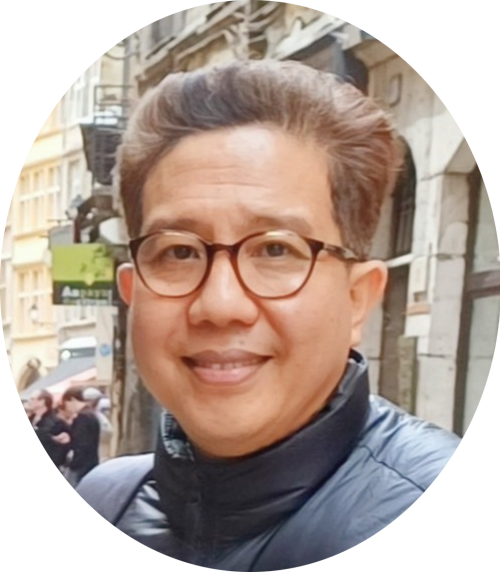
Wannawit
Taemthong
King Mongkut's University of Technology North Bangkok, Thailand
Prof. Wannawit Taemthong, Ph.D., is a distinguished civil engineer and professor at King Mongkut's University of Technology North Bangkok (KMUTNB), renowned for his expertise in cost control, productivity enhancement, and sustainable construction methods. With a rich academic background from esteemed institutions like the University of Michigan and the Asian Institute of Technology, his knowledge transcends borders. Prof. Taemthong has led numerous projects focused on advancing sustainable infrastructure and energy-efficient constructions, including green building renovation and energy-saving townhouse development. A prolific researcher and author, he has significantly contributed to the discourse on green building technologies and air quality improvement strategies in educational settings, with key publications such as "An analysis of green building costs using a minimum cost concept" (2019) and "Air quality improvement using ornamental plants in classrooms" (2021). Committed to education, he mentors the next generation of civil engineers, instilling in them a passion for innovation and sustainability, and his dedication to excellence and advocacy for environmentally-friendly practices have earned him respect.
Speech title "Green Buildings and Indoor Air Quality: Understanding and Mitigating VOC Emissions"
Abstract-Indoor air quality (IAQ) is an essential component of green and
healthy buildings. However, the increasing emphasis on energy efficiency and
building airtightness can reduce air exchange and contribute to the
accumulation of indoor pollutants. Volatile organic compounds emitted from
newly installed construction and finishing materials are of particular
concern during the post-construction and pre-occupancy periods. Green
building frameworks such as Leadership in Energy and Environmental Design
(LEED) address this issue through strategies including low-emitting material
selection and indoor air quality management. LEED recommends a maximum TVOC
concentration of 0.5 mg/m³ for indoor air quality prior to occupancy.
This keynote presents experimental evidence on total volatile organic
compound (TVOC) emissions from commonly used residential construction
materials and explores ornamental plants as a supplementary nature-based
strategy for improving IAQ. Controlled chamber experiments demonstrated
substantial differences in both the magnitude and decay patterns of TVOC
emissions among construction materials. Silicone-based sealants exhibited
high initial emissions followed by relatively rapid decay, whereas other
materials showed lower but more persistent emissions. These findings
emphasize that green material selection should consider not only initial
TVOC content but also actual emission profiles and the time required for
indoor concentrations to decline toward acceptable pre-occupancy levels.
Chamber experiments with nine ornamental plant species further demonstrated
species-dependent TVOC removal performance. Spathiphyllum sp. and Hedera
helix exhibited high overall absorption, while Dracaena braunii achieved the
highest removal performance when normalized by leaf surface area. Subsequent
field measurements in newly completed condominium units, however,
demonstrated the challenge of translating laboratory phytoremediation
performance into real buildings. Spider plants produced substantial initial
TVOC reductions, but the effect diminished considerably after 24 hours and
was no longer evident after 48–72 hours.
The findings demonstrate that achieving LEED-aligned IAQ objectives requires
an integrated approach combining low-emitting material selection, source
control, adequate ventilation, pre-occupancy IAQ management, and
evidence-based nature-based mitigation. Ornamental plants can complement
these strategies but should not replace fundamental source-control and
ventilation measures. Bridging laboratory testing with field validation is
therefore critical for translating green building certification objectives
into healthier indoor environments.
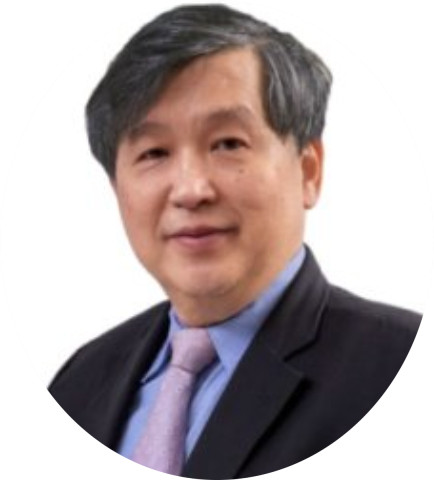
Pen-Chi Chiang
National Taiwan University, Taiwan
Dr. Chiang began engaging in teaching and research activities in National Taiwan University since he obtained PhD degree from the Department of Civil Engineering, Purdue University, USA in 1982. Currently, he is a Distinguished Professor of Graduate Institute of Environmental Engineering, National Taiwan University, a Director of Carbon Cycle Research Center of National Taiwan University, a BCCE of American Academy of Environmental Engineers and Scientists (AAEES), a Fellow of Water Environment Federation (WEF), and a Diplomat of the American Academy of Water Resources Engineers of the American Society of Civil Engineers (ASCE). He has been actively involved the international and national academic associations served as the Board of Director (1987-2007), Executive Committee (2001), Academic Committee (2008-present), WEF; Chairman, IAWQ Specialized Conference (2001); President, Chinese Institute of Environmental Engineering (2004-2006); and AIChE Local Chapter (2009-present). Dr Chiang is known for his work in physicochemical treatment such as carbon adsorption, membrane and ozonation processes. In addition, he was also devoted to the research projects in the area of carbon capture technology, integrated watershed management, and sustainability for energy and industrial development. He has received numerous awards for research achievements, including Outstanding Research Award, National Science Council (1988-1999), Distinguished Chinese Institute of Engineer Research Award (1993), Outstanding Chinese Institute of Environmental Engineering Research Award (1993, 1995), Best Paper Award, Environmental and Water Resource Institute, ASCE (2005), and Best Paper Award, Chinese Institute of Environmental Engineering (2011, 2014). Dr Chiang has published more than 200 paper papers in the above area since 1990.
Copyright © 2026 2nd International Conference on Civil Engineering and Sustainable Building (ICCESB 2026). All rights reserved.